BHUTAN
Travelog
06
Mar, 2026

Tashichho Dzong: Bhutan’s Fortress of Governance and Monastic Life
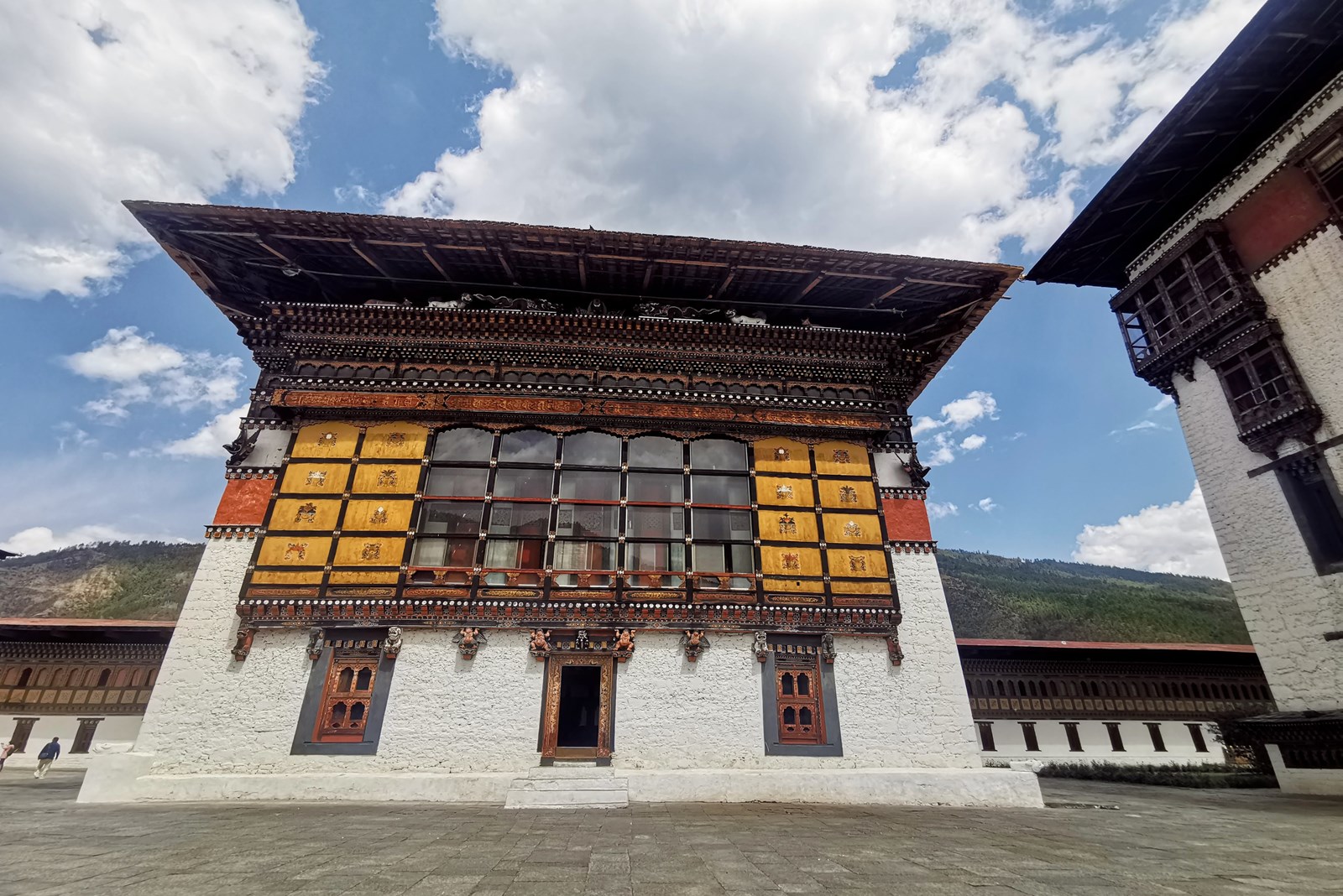
Rising gracefully along the western bank of the Wang Chhu River in the northern part of Thimphu, Tashichho Dzong stands as one of Bhutan’s most recognisable landmarks. More than simply an architectural icon, the fortress-monastery embodies the heart of the nation’s governance, spirituality and cultural identity. Within its whitewashed walls and golden roofs, Bhutan’s political leadership and monastic community coexist, reflecting the country’s unique balance between state and religion.
For visitors exploring the capital, Tashichho Dzong is often one of the most memorable places in Thimphu. At first glance it appears serene and almost timeless, yet behind its tranquil courtyards lies centuries of history that shaped the modern Bhutanese state.
Origins: From Blue Stone Fortress to National Symbol
The story of Tashichho Dzong stretches back more than eight centuries. The earliest structure associated with the site was built in 1216 by Lama Gyalwa Lhanangpa, who established a monastery known as Dho-Ngon Dzong, or the “Blue Stone Fortress”, on a ridge above the present complex.
In the 17th century, Bhutan entered a transformative period under Zhabdrung Ngawang Namgyal, the spiritual leader credited with unifying the country. In 1641, he took control of the earlier fortress, expanded it and renamed it Tashichho Dzong, meaning “Fortress of the Glorious Religion.”
Over the centuries the dzong experienced several cycles of destruction and renewal. Fires, earthquakes and political change repeatedly altered the structure. After a devastating fire in 1771, the remaining buildings were consolidated and expanded into what became the main dzong complex used today.
The most significant transformation occurred in the 20th century. When Bhutan’s capital moved from Punakha to Thimphu, His Majesty the Third King Jigme Dorji Wangchuck ordered a major reconstruction in the 1960s, rebuilding the fortress in traditional style while preserving key historic structures such as the central tower.
This restoration gave Tashichho Dzong its present form — a monumental complex that seamlessly blends centuries-old architecture with the functioning seat of the modern Bhutanese state.
Seat of Bhutan’s Government
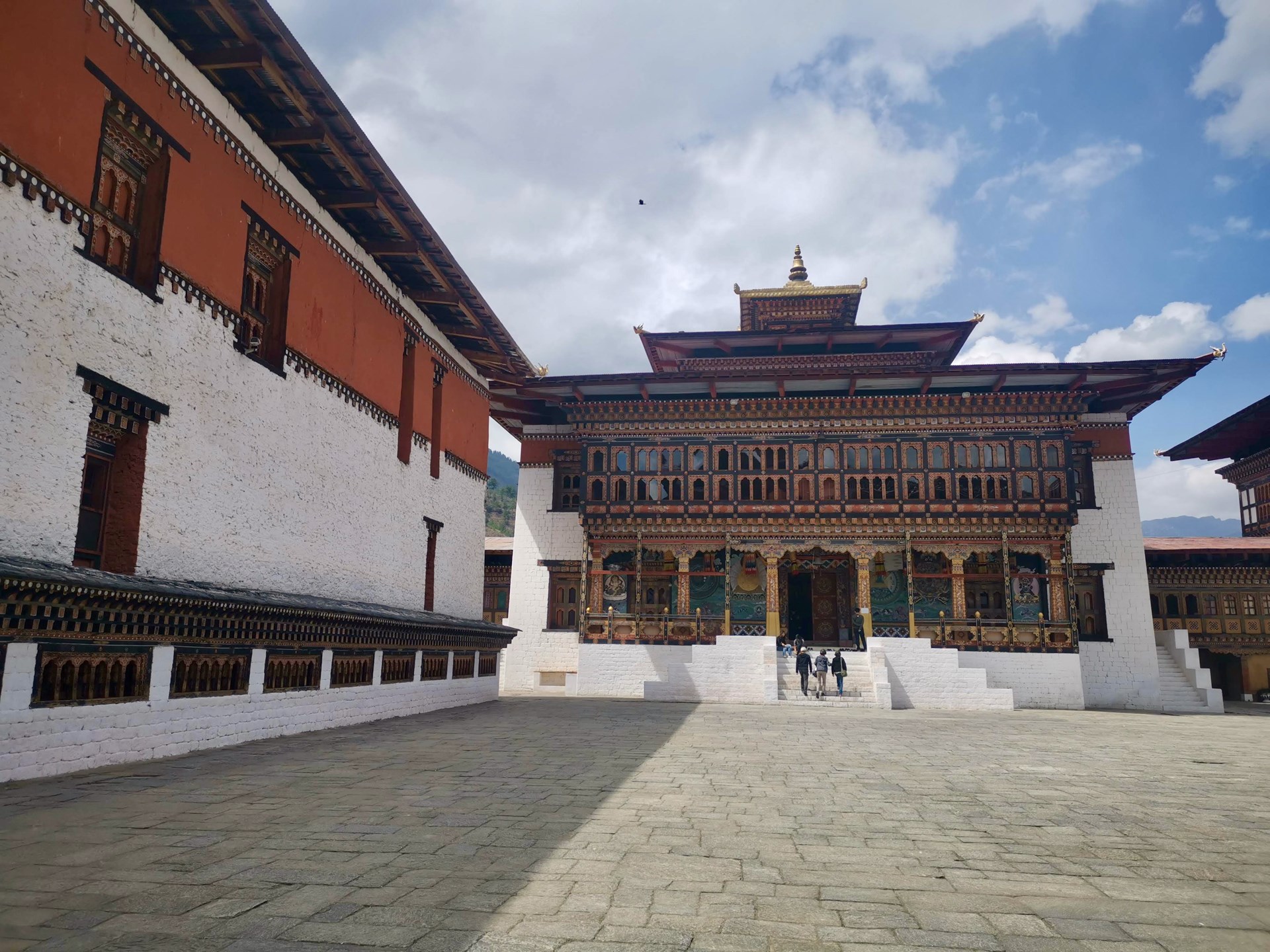
Today, Tashichho Dzong is not only a cultural monument but also the administrative heart of Bhutan. Since the mid-20th century it has served as the seat of the Bhutanese government, housing important institutions including the throne room, offices of the king and key government ministries.
Within its vast courtyards and halls, the dzong accommodates the office of His Majesty the King, the secretariat and several important ministries and administrative departments. This dual function — both administrative and spiritual — is deeply rooted in Bhutan’s governance philosophy, where secular leadership and Buddhist principles historically evolved together.
Walking through the dzong’s outer courtyards, it is easy to sense this unique harmony. Civil servants move quietly through the complex while monks in crimson robes pass between temples and prayer halls. Few places illustrate Bhutan’s cultural values as vividly as this fortress where governance and spirituality share the same space.
Summer Residence of the Central Monastic Body
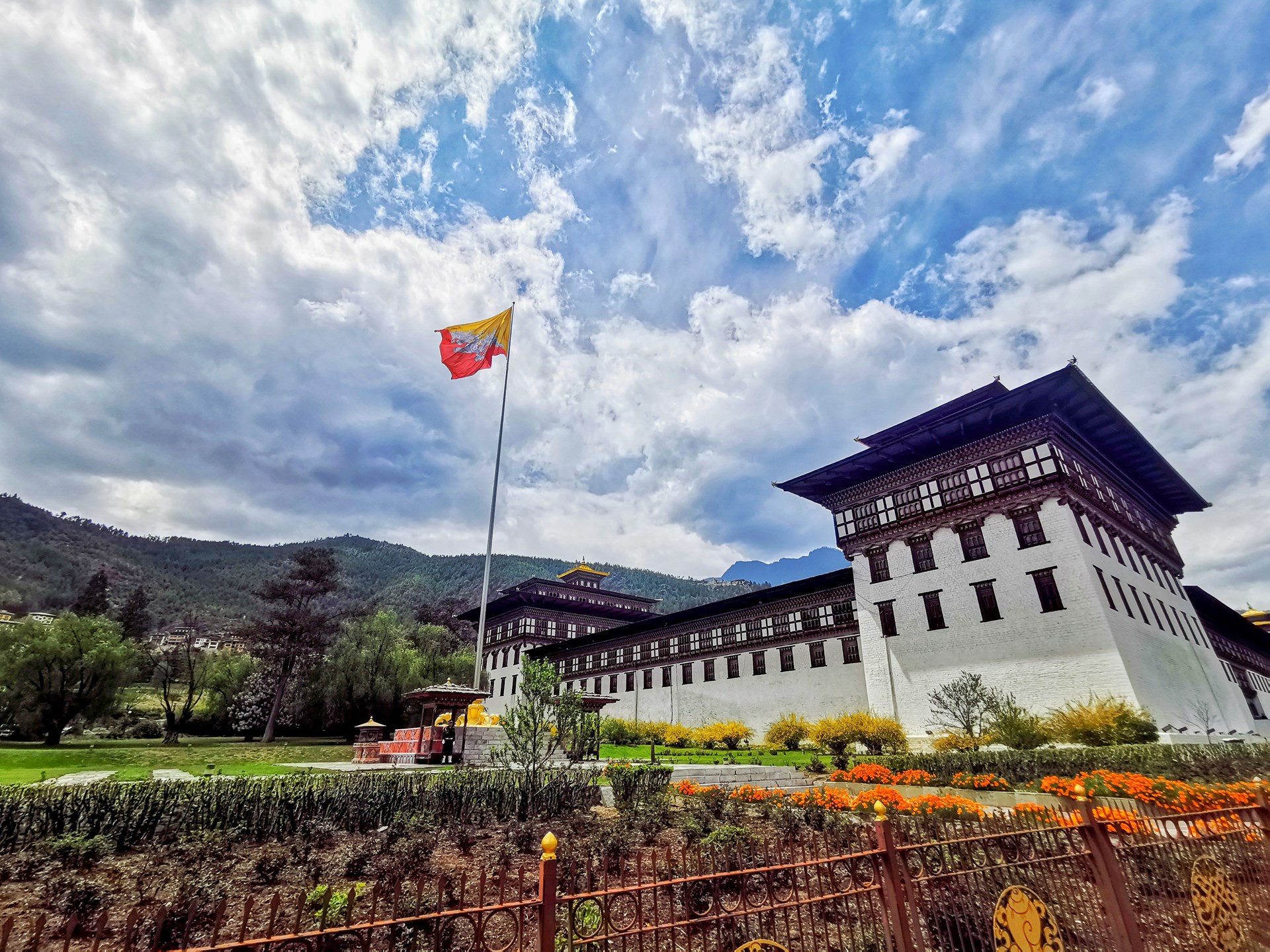
The northern portion of Tashichho Dzong belongs to the Central Monastic Body, the spiritual authority of Bhutanese Buddhism. During the summer months, the fortress becomes the seasonal residence of the Je Khenpo, the country’s chief abbot, along with hundreds of monks who reside within the monastery quarters.
This arrangement reflects Bhutan’s historic system of governance known as the Chhoe-sid Nyidhen, a dual system in which religious and temporal authorities share responsibility for the nation. Tashichho Dzong physically embodies this philosophy — a place where monks meditate, pray and perform rituals just steps away from the administrative offices of the state.
Within the dzong are numerous temples, shrines and sacred chapels, many adorned with intricate murals, statues of Buddhist masters and sacred relics. Although several inner sanctuaries remain closed to casual visitors, the presence of active monastic life gives the dzong a deeply spiritual atmosphere.
Architecture: The Elegance of Bhutanese Fortress Design
Like other Bhutanese dzongs, Tashichho Dzong is built in a distinctive architectural style designed to function both as a monastery and a defensive fortress.
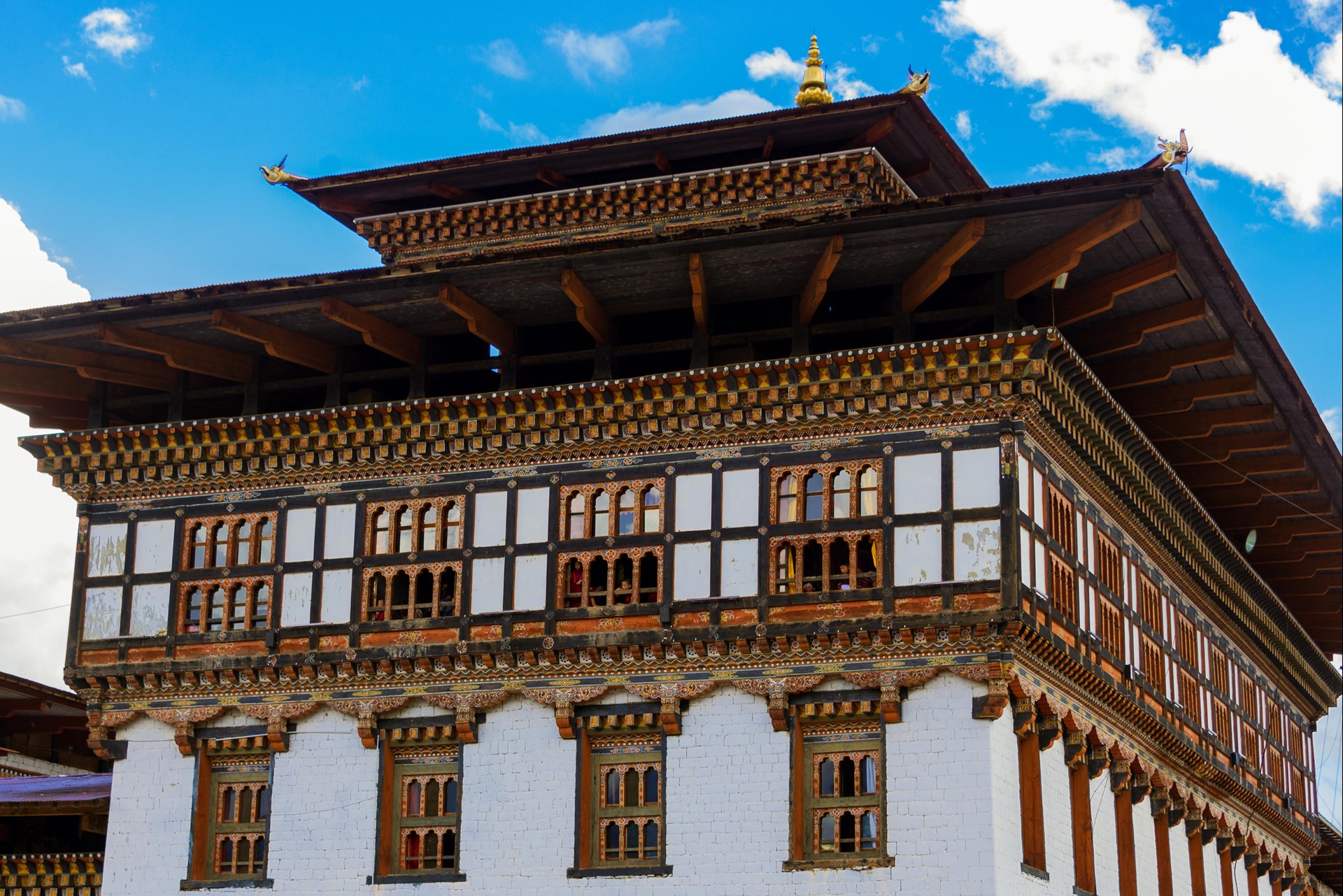
The structure features massive whitewashed stone walls, large courtyards enclosed by monastic and administrative buildings, golden tiered roofs and intricately carved wooden windows. At the centre rises the utse, the central tower that houses some of the dzong’s most sacred temples.
Dzongs throughout Bhutan historically served as fortified administrative centres that combined religious, political and military functions within one complex. Tashichho Dzong reflects this tradition while also showcasing some of the finest examples of Bhutanese craftsmanship.
The reconstruction in the 1960s carefully preserved traditional building methods, relying on intricate carpentry techniques and detailed woodwork. The result is an architectural masterpiece that feels both monumental and harmonious with the surrounding valley landscape.
The Heart of Thimphu’s Festivals
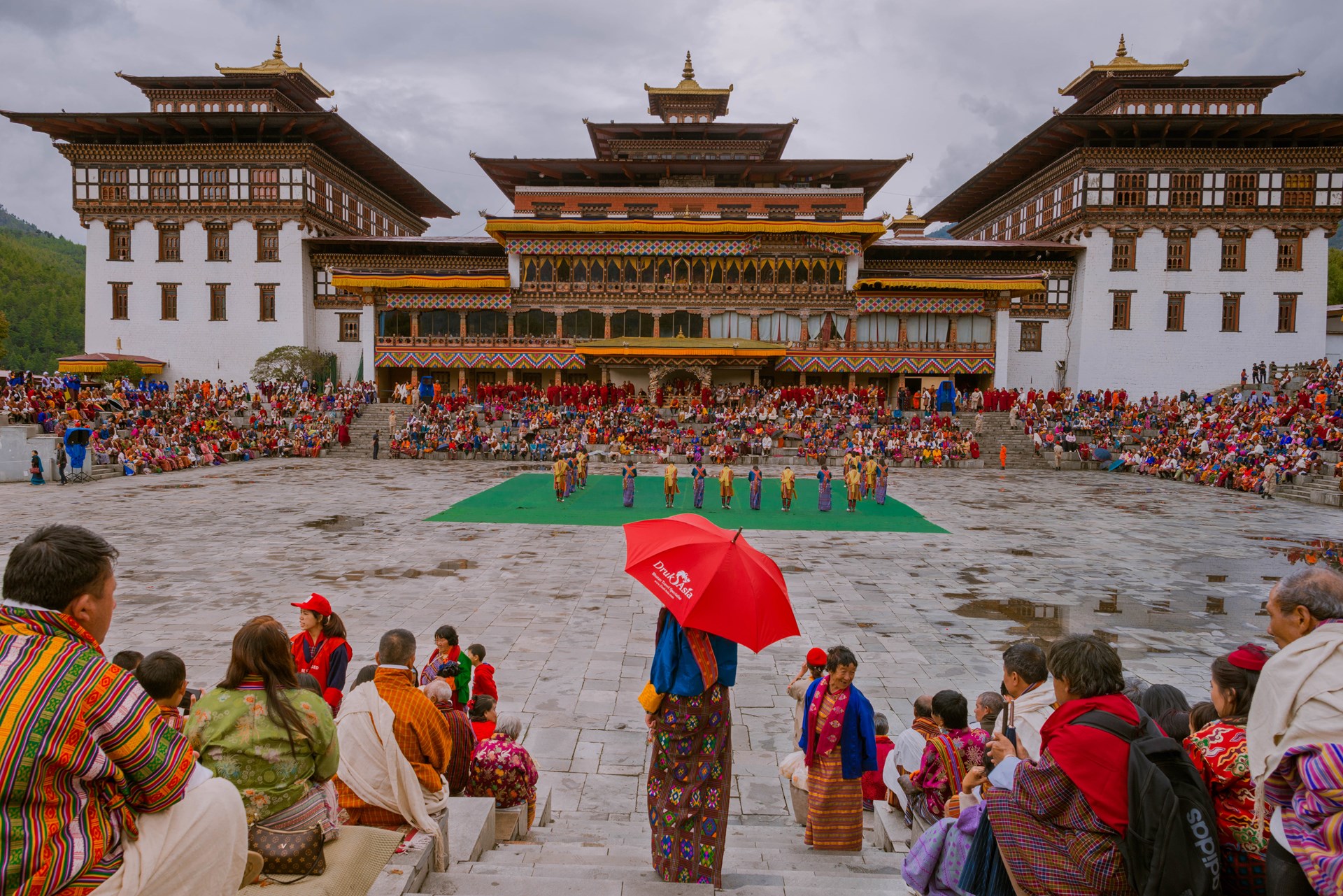
Each autumn, the vast courtyard of Tashichho Dzong becomes the stage for one of Bhutan’s most celebrated religious events — the Thimphu Tshechu.
This annual festival draws thousands of Bhutanese pilgrims and international visitors who gather to witness sacred masked dances performed by monks and lay dancers. These ritual dances are believed to confer blessings and spiritual merit to those who witness them.
During the tshechu, the normally serene dzong transforms into a vibrant gathering place filled with colourful traditional clothing, ceremonial music and ancient religious performances that have been preserved for centuries.
Visiting Tashichho Dzong Today
For travellers exploring Thimphu, Tashichho Dzong is typically visited in the late afternoon or early evening. This timing allows visitors to witness the fortress illuminated by warm golden lights as the sun sets over the valley, a moment when the dzong appears especially majestic against the backdrop of the surrounding mountains.
While certain sections are restricted due to its role as a government complex, visitors are usually allowed to enter selected courtyards and admire the architecture from within the walls.
A visit here offers more than just a sightseeing opportunity. It provides a glimpse into the living heart of Bhutan — a nation where political leadership, spiritual practice and cultural heritage remain closely intertwined.
Why Visit Tashichho Dzong
Among Bhutan’s many dzongs, Tashichho Dzong occupies a uniquely important place. It serves simultaneously as the political centre of the kingdom, a monastic residence and sacred site, a symbol of Bhutanese identity and governance, and a stage for major national festivals.
Few places illustrate Bhutan’s philosophy of harmony between tradition and modern governance as clearly as this fortress-monastery. Standing quietly beside the Wang Chhu River, Tashichho Dzong is more than an architectural landmark — it is the living embodiment of Bhutan’s history, faith and national spirit.



Follow Druk Asia on social media for inspiring travel stories, breathtaking photos, and the latest updates from Bhutan.
Ready to Experience the Magic of Bhutan?
Fill in the form below and the friendly Bhutan Travel Specialist team will get back to you with expert advice, itinerary ideas, and everything you need to know. No obligations, just warm guidance from those who know Bhutan best.
Thank you for your message!
Hang tight—one of our friendly Bhutan Travel Specialists from Druk Asia will be reaching out soon with expert tips, insider advice, and exciting itinerary ideas to help you plan the adventure of a lifetime!
Discover
Breathtaking
Bhutan.
Thank you for subscribing!
You have successfully subscribed to our newsletter.
