BHUTAN
Travelog
11
Dec, 2025

Monsoon in Bhutan: Why June-August is the 'Secret Season'
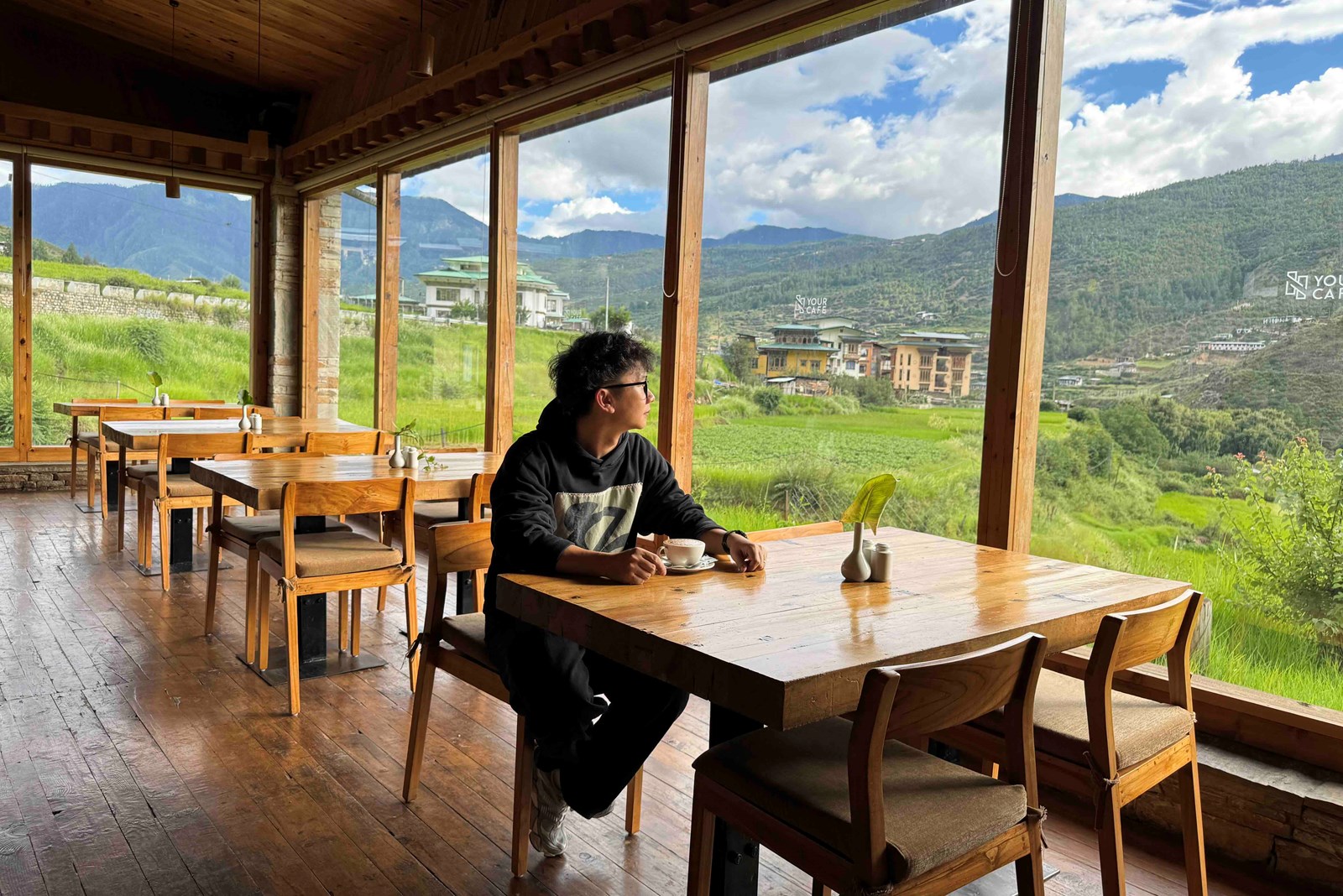
Most travel guides will tell you to visit Bhutan in spring (March-May) or autumn (September-November). They will warn you about the "monsoon" and steer you toward the crowded, high-tariff months.
Here is the truth they often miss: July and August are Bhutan’s "Emerald Season."
For the contrarian traveler—the one who values solitude, atmosphere, and value over checking boxes—this is arguably the most magical time to visit the Land of the Thunder Dragon.
1. The "Monsoon" Myth vs. Reality
The word "monsoon" conjures images of non-stop, torrential rain that washes out entire days. In Bhutan, this is rarely the case.
-
The Pattern: Bhutanese rain typically behaves like clockwork. It often arrives in the late afternoon or overnight. You might wake up to mist-shrouded valleys and wet streets, but the days frequently break into clear, crisp sunshine.
-
The Clouds: Rather than gloomy gray skies, you get dramatic, moving cloud formations. The clouds hang low over the mountains, weaving through the pine forests and clinging to the white-washed walls of the Dzongs, creating a mystical atmosphere that photographers dream of (and that you can't get in clear blue October).
-
Temperature: While spring can still be chilly, summer is genuinely warm. Thimphu and Paro see highs of 24°C–26°C (75°F–79°F), making it comfortable for t-shirt exploration.
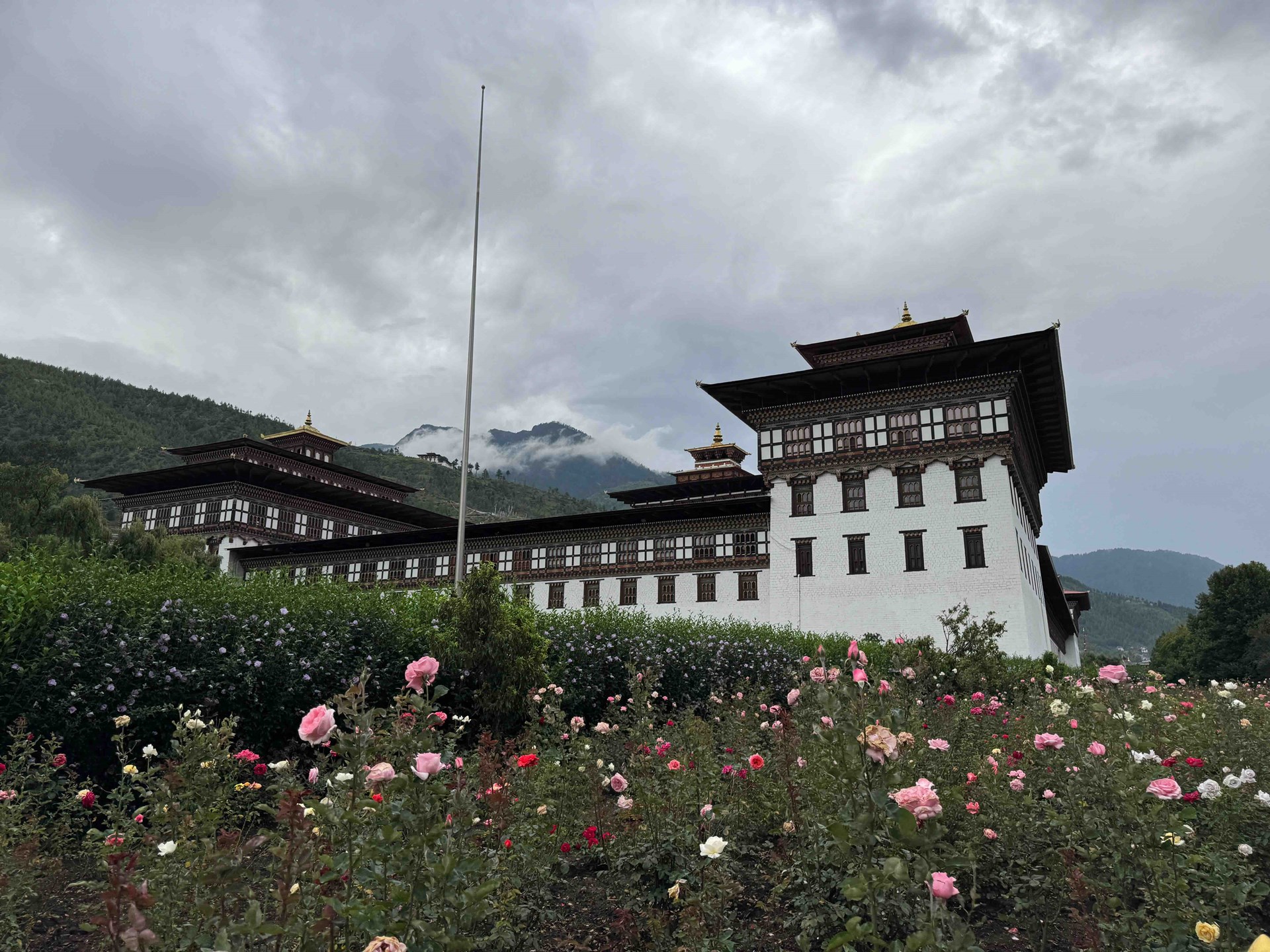
2. The Landscape: A Photographer’s Dream
If you visit in spring, the mountains are brown and dry after the long winter. In July and August, the country transforms into a vibrant, glowing green.
-
Rice Terraces: The iconic terraced fields of Punakha and Paro are planted in June. By July, they are a brilliant, electric green "sea" that ripples in the wind.
-
Flora: This is the only time to see the elusive Blue Poppy (Bhutan’s national flower) blooming in the high alpine meadows (late June–July). The forest floors are also carpeted in wild orchids and mushrooms.
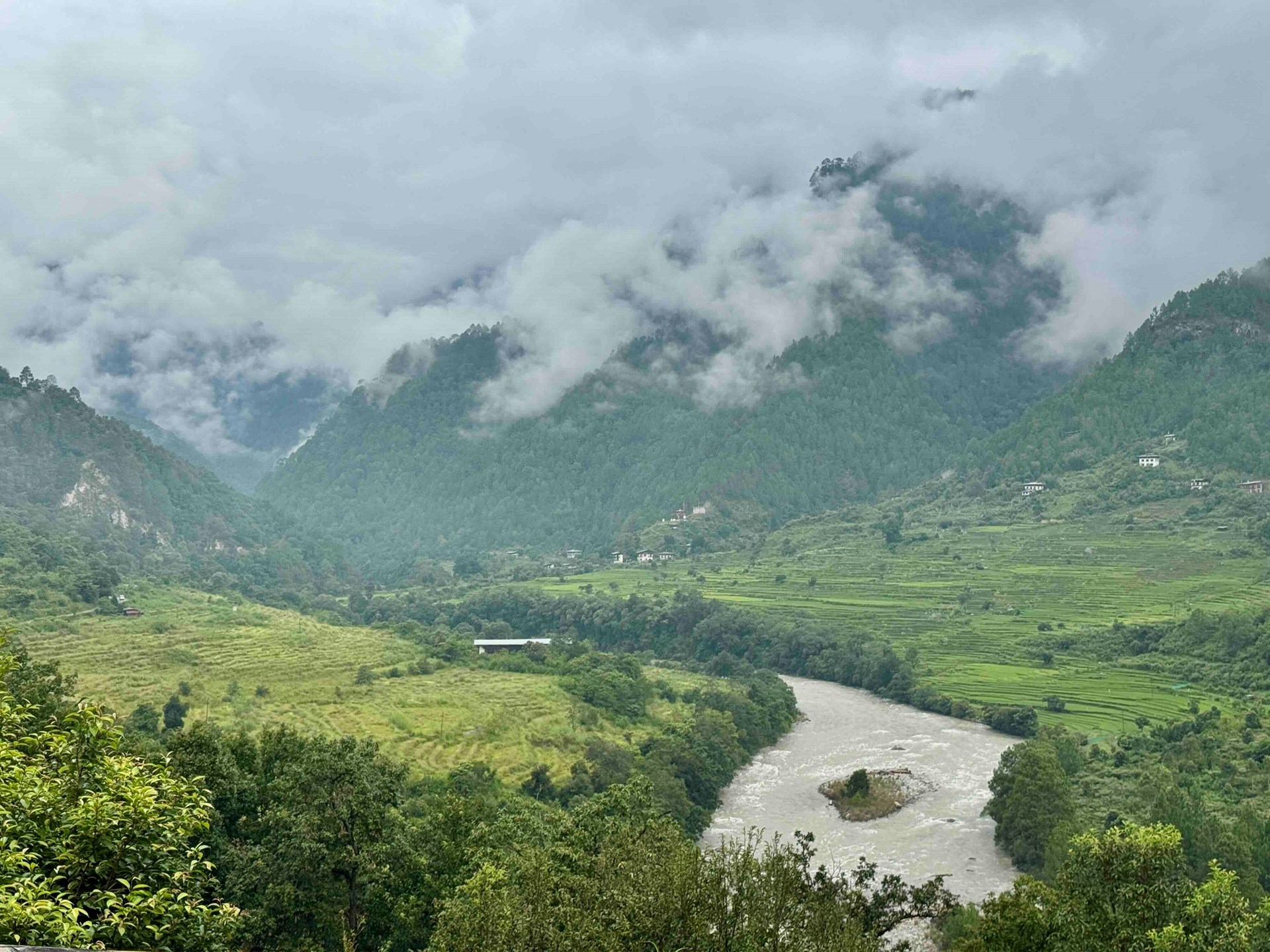 Breathtaking view from COMO Uma Punakha two bedroom village in summer
3. The "Contrarian" Economics: Luxury for Less
Bhutan is an exclusive destination, but the summer months offer a rare opportunity to upgrade your experience significantly.
-
Hotel Upgrades: Because occupancy is lower, luxury 5-star properties often drop their rates significantly or offer "stay 3, pay 2" deals. You can stay in palaces for the price of standard hotels.
-
Flight Availability: Drukair and Bhutan Airlines flights are rarely full. You can often secure dates last minute, and you’re far more likely to get that coveted window seat for a beautiful landing view.
-
Solitude: The most famous sites—like the Tiger’s Nest (Paro Taktsang)—can be crowded in Spring or Autumn. In Summer, you might be one of the only people on the trail. You get the monastery to yourself, allowing for genuine connection with the monks and the silence of the space.
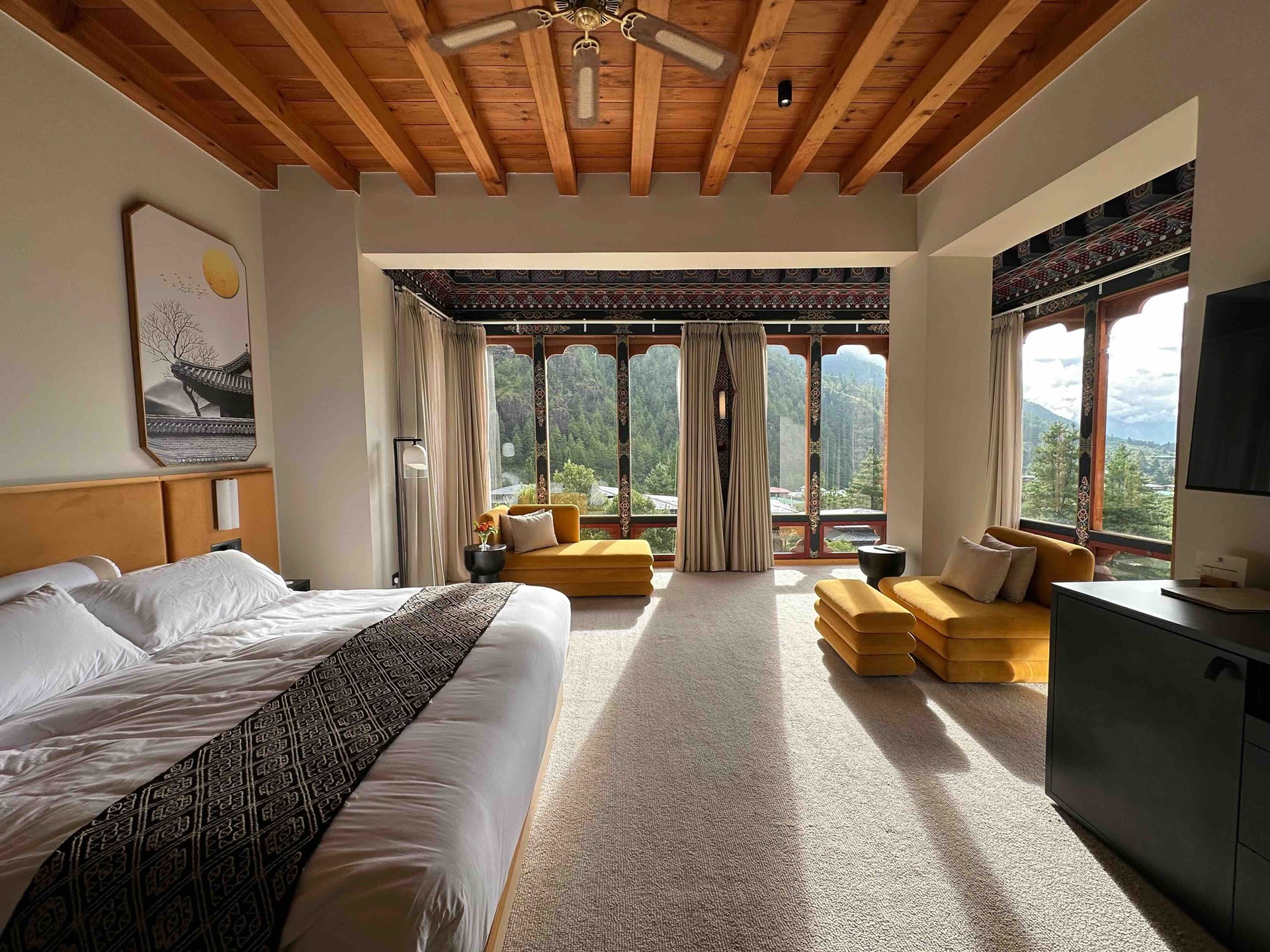 Zhiwaling Heritage, the first and only fully Bhutanese-owned 5-star property in Bhutan
Pro Tips
The only thing to note though is that there might not be air-conditioning for 3-star hotels in Bhutan. It could get warm during certain days. If that is an issue, you are advised to consider an upgrade to a 4-star or 5-star hotel for the best experience.
4. Exclusive Summer Culture
Summer isn't devoid of culture; it hosts some of the most intimate and unique festivals that the mass tourists miss.
-
Matsutake Mushroom Festival (August): Held in the magical Ura Valley (Bumthang), this festival celebrates the prized Matsutake mushroom. Visitors can forage in the forests with locals and enjoy mushroom-themed feasts.
-
Nimalung Tshechu & Kurjey Tshechu (June/July): These festivals in Bumthang are deeply spiritual and attended mostly by locals, offering a much more authentic look at Bhutanese faith than the massive Thimphu Tshechu in autumn.

5. Practical Truths for the Summer Traveler
To be transparent, there are trade-offs. Here is how to prepare:
-
The Views: You will likely not see the high snow-capped Himalayan peaks (like Jomolhari) due to cloud cover. If your sole goal is mountain panoramas, go in winter.
-
Leeches: On forest trails (not in towns), leeches come out in the damp. Pro-tip: A little salt or tobacco keeps them away, and Bhutan tour guides are expert at spotting them.
-
Roads: Occasional road blocks can happen due to mud, but the Department of Roads in Bhutan is incredibly efficient, usually clearing way within an hour or two.
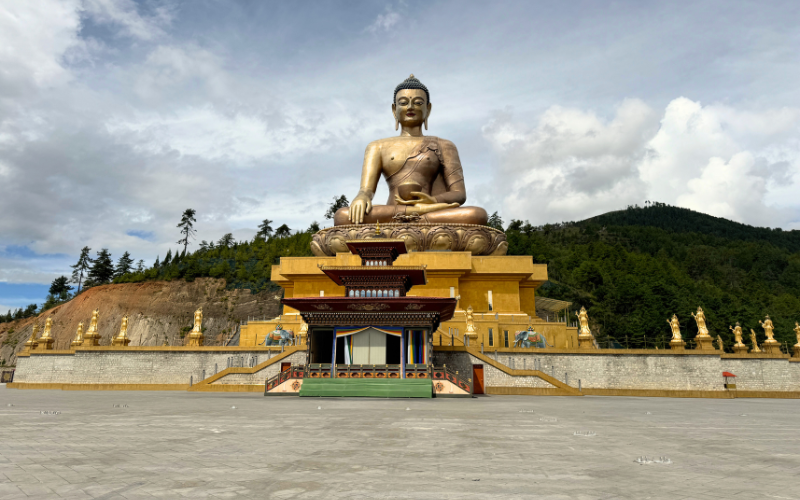 In return, you’ll have the popular attractions almost entirely to yourself — no crowds to dodge, no worrying about photobombs, just peaceful moments and uninterrupted views.
Who is this for?
Visit in June–August if: You’re dreaming of warm Asian summer days, vivid green valleys, soft mountain mist and a slower, more intimate way to experience the Kingdom. It’s perfect if you enjoy seeing the “real” living Bhutan, love the idea of luxury hotels at better value, and prefer attractions without crowds.
Average temperature in Bhutan by month
| Month | Paro | Punakha | Thimphu | Bumthang | Gangtey (Phobjikha) |
| January | 9.4 / -5.8 | 16.1 / 4.2 | 15.1 / -2.1 | 11.4 / -3.9 | 9 / -4 |
| February | 13.4 / 1.5 | 19.6 / 5.3 | 16.7 / 0.5 | 13.0 / -1.0 | 11 / -3 |
| March | 14.5 / 0.6 | 21.2 / 9.2 | 19.4 / 4.0 | 15.4 / 2.2 | 13 / 0 |
| April | 17.6 / 4.6 | 24.4 / 11.9 | 22.4 / 7.8 | 17.5 / 6.0 | 16 / 3 |
| May | 23.5 / 10.6 | 27.2 / 14.8 | 24.7 / 11.5 | 19.7 / 9.5 | 18 / 7 |
| June | 25.4 / 13.1 | 31.2 / 19.5 | 26.7 / 15.2 | 22.0 / 13.0 | 20 / 10 |
| July | 26.8 / 14.9 | 32.0 / 21.6 | 27.1 / 16.4 | 22.7 / 14.4 | 21 / 12 |
| August | 25.3 / 14.7 | 31.4 / 19.8 | 27.2 / 16.1 | 22.7 / 14.2 | 21 / 12 |
| September | 23.4 / 11.7 | 29.9 / 20.0 | 26.1 / 14.6 | 21.6 / 12.5 | 20 / 10 |
| October | 18.7 / 7.4 | 27.8 / 18.9 | 23.4 / 9.0 | 18.8 / 7.0 | 17 / 5 |
| November | 13.9 / 1.4 | 22.3 / 13.0 | 19.7 / 3.2 | 15.6 / 1.2 | 14 / -1 |
| December | 11.2 / -1.7 | 15.0 / 7.9 | 16.5 / -0.8 | 12.9 / -2.9 | 11 / -4 |



Follow Druk Asia on social media for inspiring travel stories, breathtaking photos, and the latest updates from Bhutan.
Ready to Experience the Magic of Bhutan?
Fill in the form below and the friendly Bhutan Travel Specialist team will get back to you with expert advice, itinerary ideas, and everything you need to know. No obligations, just warm guidance from those who know Bhutan best.
Thank you for your message!
Hang tight—one of our friendly Bhutan Travel Specialists from Druk Asia will be reaching out soon with expert tips, insider advice, and exciting itinerary ideas to help you plan the adventure of a lifetime!
Discover
Breathtaking
Bhutan.
Thank you for subscribing!
You have successfully subscribed to our newsletter.
