BHUTAN
Travelog
31
Aug, 2026

How to Wear a Kira and Gho: A Complete Guide to Bhutan’s National Dress
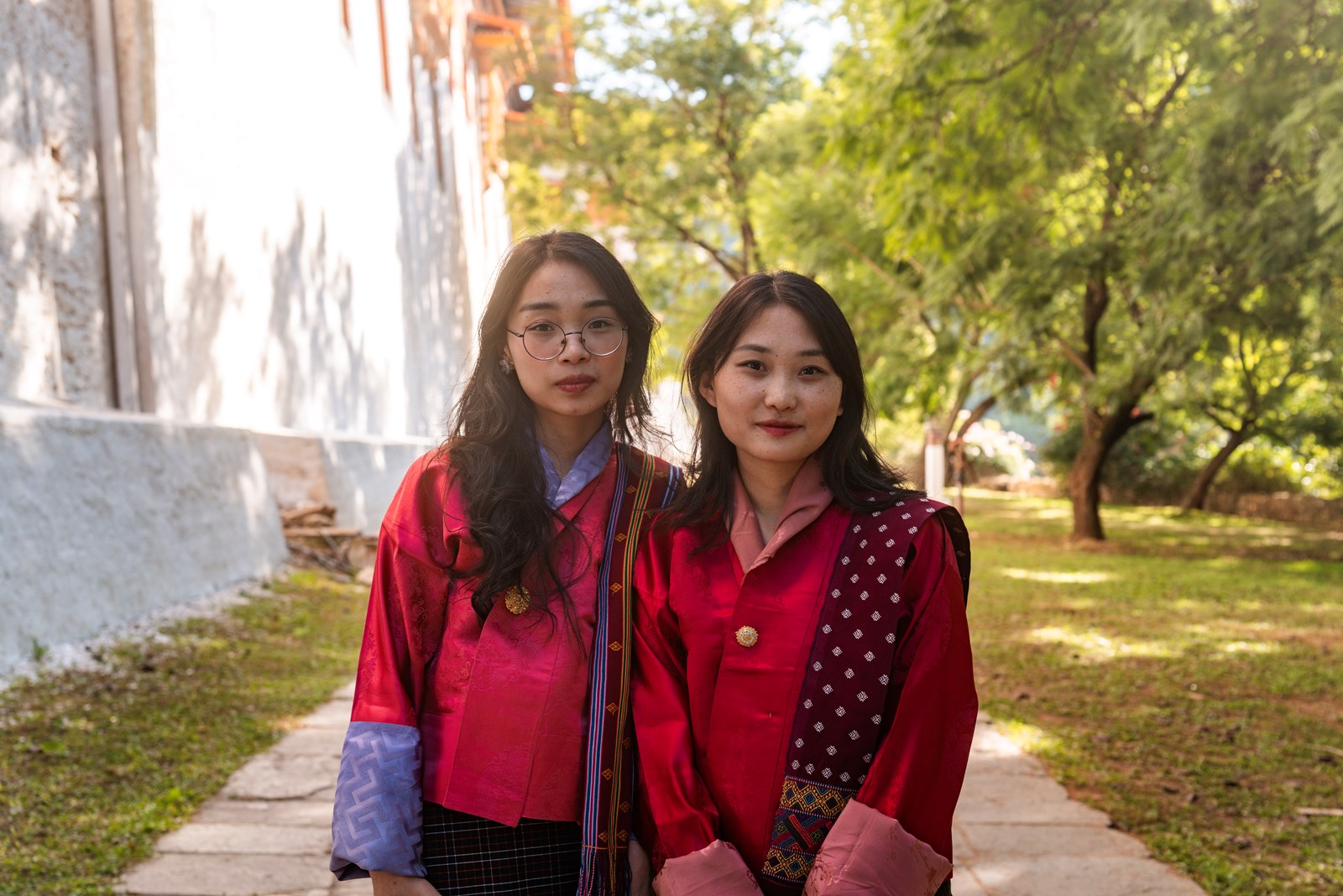
Bhutan’s national dress is one of the most distinctive expressions of the country’s identity. Women traditionally wear the kira, an elegant ankle length garment secured at the shoulders and waist. Men wear the gho, a robe carefully folded and belted so that it falls around the knees. You will see both outfits in schools, government offices, religious sites, formal gatherings and Bhutan’s colourful festivals.
For Bhutanese people, the kira and gho are much more than beautiful clothing. They represent cultural continuity, skilled textile traditions and pride in a shared national identity. They are also closely connected with Driglam Namzha, Bhutan’s traditional code of etiquette and conduct.
If you are visiting Bhutan, wearing the national dress can be a meaningful cultural experience. The garments are not difficult to wear once you understand how the layers, folds and fastenings work, although getting a polished fit usually takes a little practice. This guide explains how to wear a full kira and a gho correctly, what each part is called and how to dress respectfully for festivals and religious sites.
Pro Tip
When you book your Bhutan tour with Druk Asia, you will receive complimentary use of a kira or gho for photography throughout your journey. Simply return the outfit at the end of your trip.
What Are the Kira and Gho?
The kira is the national dress traditionally worn by Bhutanese women. A full kira begins as a large rectangular piece of woven cloth. It is wrapped around the body, fastened at both shoulders and held at the waist with a woven belt. The finished garment reaches the ankles.
The gho is the national dress traditionally worn by Bhutanese men. It is a long robe that crosses at the front and is gathered at the waist. Once secured with a belt, the upper fabric forms a deep pouch and the lower part hangs around the knees.
Both garments are associated with Bhutan’s living textile heritage. Everyday versions may use cotton, wool or blended fabric, while silk and finely handwoven textiles are often chosen for weddings, religious ceremonies and festivals. The colours and patterns range from restrained checks and stripes to intricate designs created by highly skilled weavers.
You can learn more about the role of national dress in daily life through this guide to Bhutanese culture and etiquette.
Parts of a Traditional Kira
Before learning how to wear a kira, it helps to recognise the different pieces that form the complete outfit.
| Garment or accessory | Purpose |
|---|---|
| Kira | The main rectangular cloth, wrapped around the body from the shoulders to the ankles |
| Wonju | A long sleeved inner blouse worn beneath the kira |
| Koma | A pair of decorative brooches or clasps used to fasten the kira at the shoulders |
| Kera | A long woven belt wrapped around the waist to secure the kira |
| Tego | A short jacket worn over the kira, also commonly spelt tego |
| Rachu | A narrow embroidered ceremonial scarf worn over the left shoulder for formal and religious occasions |
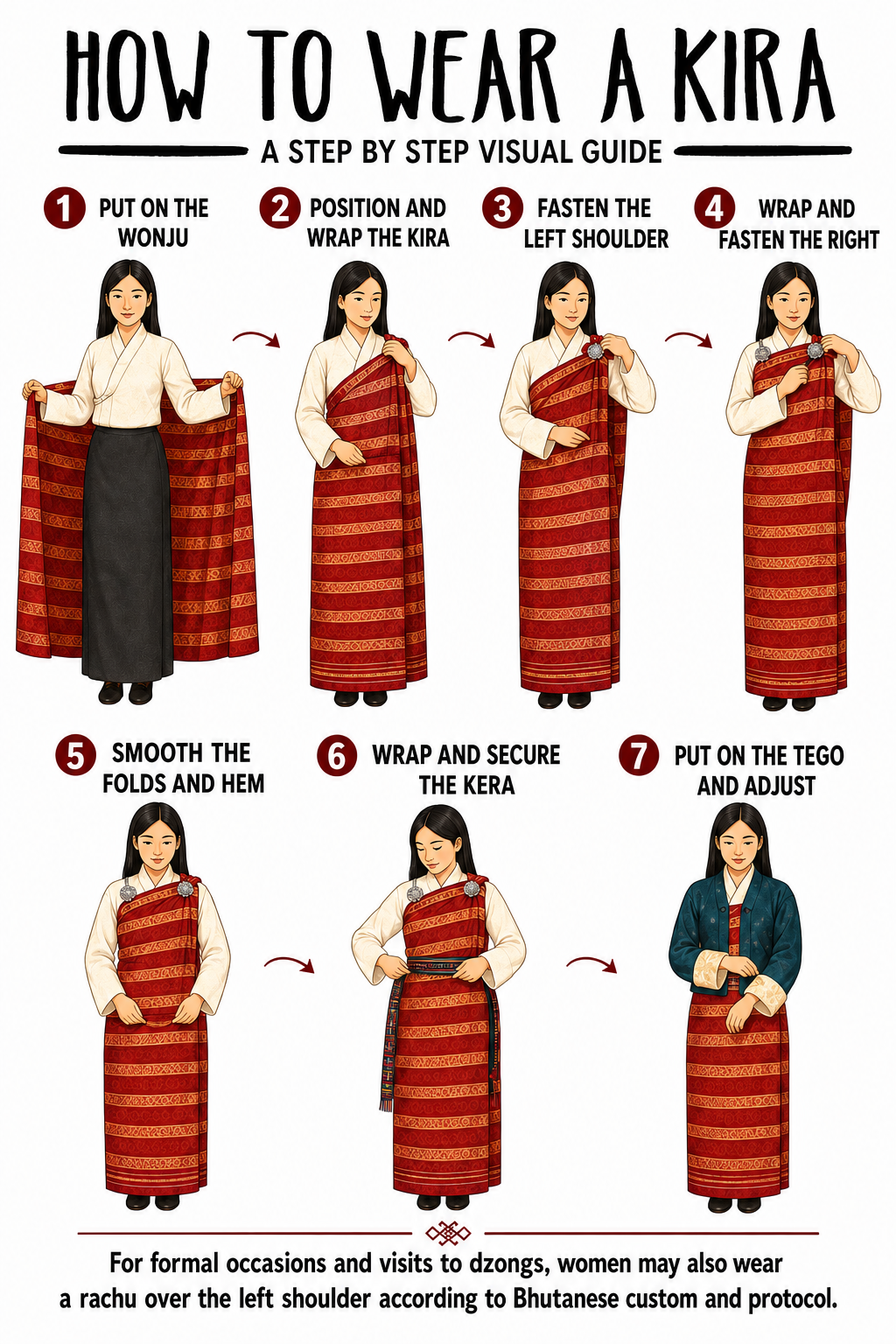
How to Wear a Full Kira Step by Step
The full kira requires more wrapping than a half kira, but the basic method becomes much easier once you understand where the fabric should cross and fold.
1. Put on the wonju
Begin with the wonju, the long sleeved blouse worn beneath the kira. Fasten it comfortably and smooth the fabric around the shoulders, collar and arms. The wonju may later be folded back over the collar and cuffs of the toego to create a neat contrast.
If the kira fabric is light or you would like more coverage, wear a comfortable underskirt beneath it. Choose a slim layer that will not add unnecessary bulk at the waist.
2. Position the kira behind you
Open the kira fully and check that its pattern is facing outwards. Place the cloth across your back and bring it under your right arm. The lower edge should hang evenly and finish close to your ankles.
Take a moment to check the hem before continuing. Correcting the length is much easier now than after the shoulders and belt have been secured.
3. Bring the fabric across the front
Draw the first section across your chest towards your left shoulder. Keep the upper edge comfortably firm beneath the arm, without pulling so tightly that it restricts movement or breathing.
Fasten this section at the left shoulder with the first koma. Make sure the brooch catches enough fabric to hold the kira safely, but avoid forcing a sharp pin through an especially delicate woven area.
4. Create the front folds
Fold the remaining fabric across the front of your body. Bring one section from left to right, then fold the next section back from right to left. These overlapping layers create the full coverage and clean front line of the kira.
Keep the vertical edges straight and align the woven pattern as closely as possible. The fabric should lie smoothly rather than bunching around the chest or waist.
5. Wrap the remaining cloth around your back
Gather the remaining fabric beneath your left arm and carry it around your back towards your right shoulder. Smooth the back as you go, checking that the cloth has not twisted.
Secure the fabric at the right shoulder with the second koma. Both shoulder fastenings should sit at a similar height so the neckline and hem appear balanced.
6. Adjust the length and drape
Stand straight and check the kira from the front, sides and back. The hem should sit near the ankles and remain roughly parallel to the floor. Adjust the fabric at the shoulders until the length is even.
Leave enough room around the upper body to move comfortably. A correctly worn kira should feel secure, but it should not pull tightly across the chest or limit your stride.
7. Secure the kira with the kera
Wrap the kera firmly around your waist over the kira. It should be tight enough to support the weight of the fabric without becoming uncomfortable. Depending on the length of the belt, wrap it around the waist more than once and tuck the ends in neatly.
Gently arrange a small amount of fabric above the belt to create a smooth upper fold. Remove large creases and make sure the front panels remain aligned.
8. Add the toego and finish the cuffs
Put the short toego jacket on over the kira. Arrange the collar neatly, then turn back the wonju collar and sleeve edges over the toego where appropriate. The contrast between the wonju and toego is an important part of the finished appearance.
Do a final comfort check. Raise your arms, take a few steps and sit down carefully. If the shoulder clasps pull or the belt shifts, adjust them before leaving.
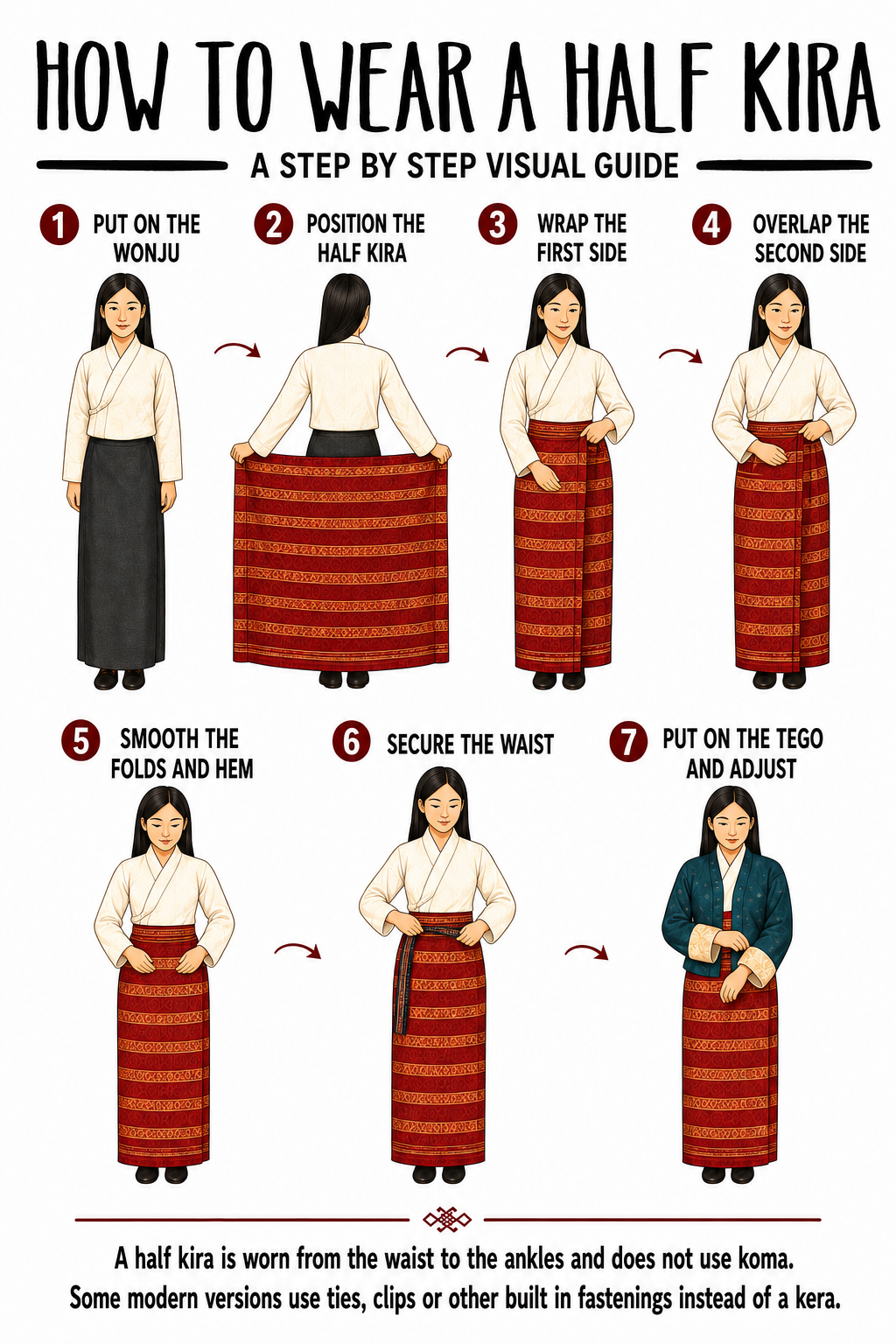
How Is a Half Kira Different?
A half kira is a skirt style version that wraps around the lower body and is usually secured at the waist. Unlike a full kira, it does not extend over the chest or fasten at the shoulders with koma. It is generally quicker to put on and is widely worn as practical everyday clothing.
To wear a half kira, put on the wonju or chosen blouse first. Wrap the half kira around your waist, align the hem and overlap the front panels securely. Fasten or tie it according to its design, then add the kera if required. Finish the outfit with a toego.
The full kira remains the more traditional and formal choice for important ceremonies, official occasions and major festivals. If you are unsure which version suits the event, ask your guide or local host.
Parts of a Traditional Gho
A properly worn gho relies on careful folding and firm support at the waist. These are the main pieces of the outfit.
| Garment or accessory | Purpose |
|---|---|
| Gho | The main robe, crossed at the front and gathered to create a knee length finish |
| Tego | The inner jacket worn beneath the gho |
| Lagay | The light coloured cuffs folded neatly back at the wrists |
| Kera | The woven belt that holds the gathered robe firmly at the waist |
| Kabney | A ceremonial scarf worn over the left shoulder during formal, religious and official occasions |
| Long socks | Socks worn to cover the legs below the knee length gho |
| Tshog lham |
Traditional embroidered boots generally reserved for ceremonial occasions |
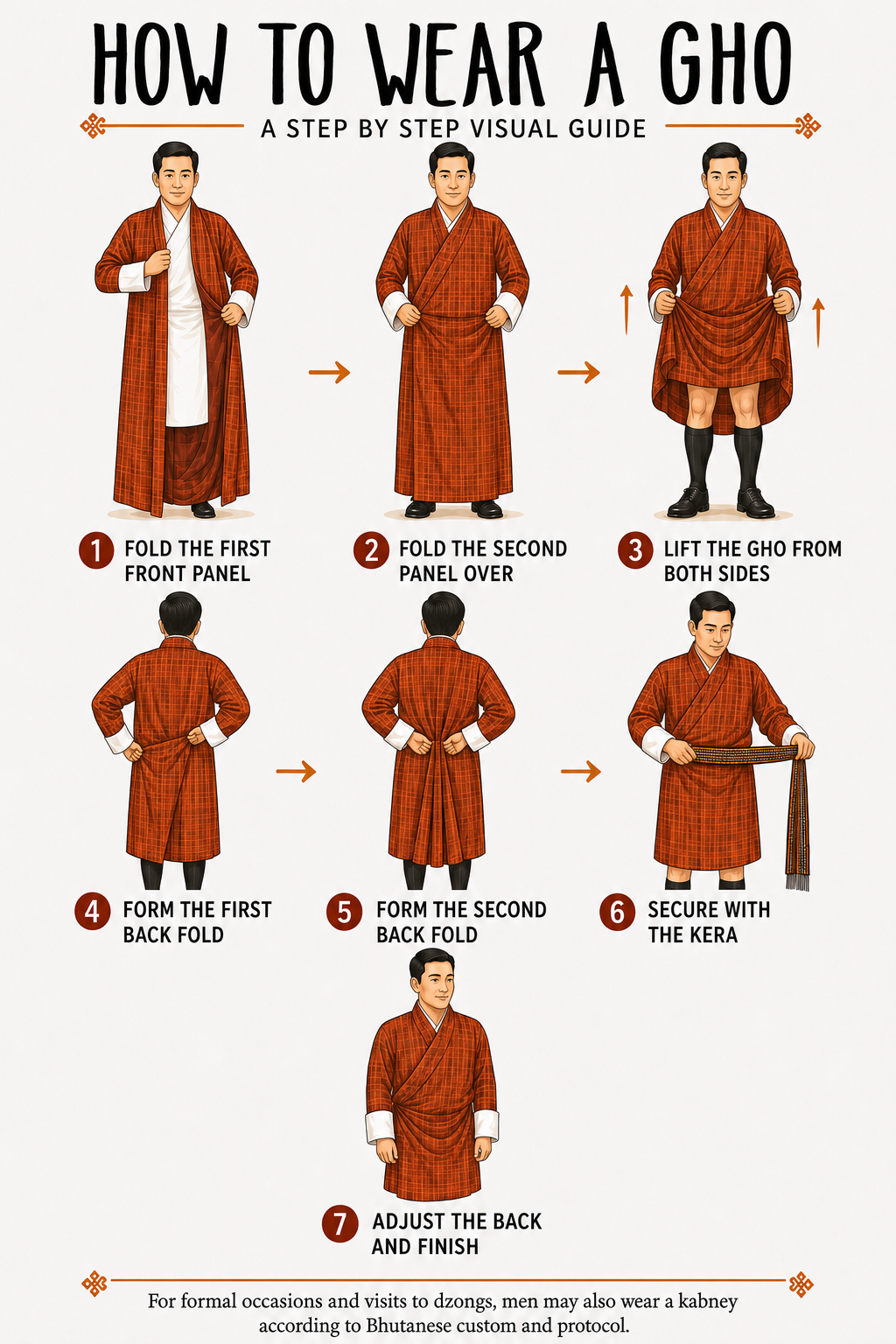
How to Wear a Gho Step by Step
The key to wearing a gho well is creating clean front overlaps, even folds at the back and a secure waist. It is helpful to have a Bhutanese guide or local friend assist the first time.
1. Put on the inner layers
Begin with the tego, the inner jacket worn beneath the gho. Depending on the occasion and personal preference, you may also wear a light shirt, shorts or slim trousers beneath the outfit. Avoid bulky garments, as they can make the gho difficult to fold neatly.
Put on long socks before arranging the gho. This is usually easier than trying to pull them up after the robe has been tied.
2. Put on the gho like a robe
Insert your arms into the sleeves and let the gho fall to its full length. Settle the shoulder seams into place and make sure the back is centred.
At this stage, the gho will hang much lower than its finished length. Do not try to shape the hem yet.
3. Cross the front panels
Bring the right front panel across your body and tuck it securely towards the left side. Then bring the left front panel across towards the right. The neckline should form a clean overlap without gaping.
Smooth the fabric across the chest and make sure both sides feel secure. The overlap should allow comfortable breathing while remaining tidy.
4. Gather and lift the gho from the middle
Hold the gho at the middle on both sides and lift the fabric evenly. Do not pull it upwards from the bottom hem. Raising it from the middle allows the lower portion to fall naturally and gives you greater control over the finished length.
Adjust the gathered fabric until the hem sits around the knees. Check that the front and back are even before securing anything.
5. Form the side and back folds
Bring the excess fabric from the sides towards the back and create broad, tidy folds. The back should lie flat and balanced, without a bulky knot of material on either side.
Ask someone to check the rear folds if you are wearing a gho for the first time. Even folds help the garment hang properly and make it more comfortable to walk and sit.
6. Tie the kera around the waist
Hold the gathered fabric firmly and wrap the kera around your waist. The belt must be secure enough to support the robe, but it should not restrict your breathing. Wrap it around as needed and tuck the ends in so they do not hang loose.
The kera provides the structure of the outfit. If it is too loose, the hem may drop and the front pouch will lose its shape.
7. Form the front pouch and conceal the belt
Arrange the upper fabric over the kera to create the gho’s characteristic front pouch. Smooth and distribute the fabric evenly so the pouch looks balanced rather than overfilled on one side.
The finished fold should cover the kera, so the belt is not visible from the outside. Check that the pouch is secure before placing personal items inside it.
8. Fold the sleeves and make final adjustments
Fold the sleeves with the lagay to create clean, even cuffs. Both cuffs should be similar in width and sit comfortably at the wrists.
Check the neckline, shoulder line, pouch, back folds and hem. The gho should sit around knee level and allow you to walk comfortably. Traditional long socks complete the everyday formal appearance, while tshog lham may be worn for special ceremonies.
How to Wear the Rachu and Kabney Respectfully
The rachu and kabney are not simply decorative additions. They form part of Bhutanese formal etiquette and are worn in particular religious, administrative and ceremonial settings.
Women wear the rachu over the left shoulder with the kira. Men wear the kabney from the left shoulder towards the right side of the body. The exact handling and folding may depend on the location, ceremony and the wearer’s status.
Different kabney colours are associated with particular ranks and offices. Visitors should not choose a ceremonial scarf purely for its colour or appearance. Use the scarf provided for you and ask your guide to show you the appropriate way to wear it.
You can read more about respectful behaviour, dress requirements and photography in this guide to Bhutan’s dzongs, lhakhangs and goembas.
When Can Travellers Wear a Kira or Gho in Bhutan?
Travellers are generally welcome to wear Bhutanese national dress when it is done respectfully. Many visitors choose to wear a kira or gho for:
-
A Bhutanese festival or tshechu
-
A visit to a dzong or cultural attraction
-
A traditional dinner or cultural programme
-
A photo session in Thimphu, Paro or Punakha
-
A wedding or formal celebration, when invited
Wearing national dress can help you understand the care involved in Bhutanese clothing and the skill behind its textiles. It should be approached as cultural appreciation rather than a costume. Ask before borrowing ceremonial accessories, avoid comic poses and treat delicate handwoven garments carefully.
Attending a tshechu is one of the best opportunities to see Bhutanese families in their finest kira and gho. Before you go, read this guide on what to wear to a Bhutanese festival and explore the best festivals in Bhutan.
Tips for Wearing Bhutanese National Dress Comfortably
Ask for help with the first fitting
Even Bhutanese people learn the precise folds through practice. A guide, host or clothing shop assistant can help position the fabric correctly and prevent the outfit from loosening during the day.
Choose the correct size and length
A kira that is too short cannot produce an elegant ankle length drape, while excessive fabric can make the folds bulky. A gho must have enough length and width to form a secure pouch without overwhelming the wearer.
Dress for the weather
Bhutan’s temperatures vary with altitude, season and time of day. Cotton and lighter fabrics are comfortable in warmer weather, while wool and heavier weaves provide useful warmth during cold mornings. Review this seasonal guide to what to wear in Bhutan before choosing your layers.
Wear comfortable footwear
Festivals and sightseeing days often involve steps, uneven courtyards and long periods of standing. Select comfortable shoes that are easy to remove, as you may need to take them off before entering temple interiors.
Avoid overfilling the gho pouch
The front pouch is practical, but too many heavy objects can distort the garment and pull against the belt. Carry only light essentials and use a small bag for everything else.
Practise sitting and walking
Take a few steps, climb a stair and sit down before leaving your hotel. This reveals loose fastenings or restrictive folds while you still have time to correct them.
Common Mistakes to Avoid
-
Wearing the kira with an uneven or overly short hem
-
Leaving the front folds twisted or misaligned
-
Fastening the koma through a fragile part of the weave
-
Tying the kera so loosely that the garment begins to slip
-
Pulling the gho upwards from its bottom edge instead of lifting it from the middle
-
Leaving the gho’s kera exposed rather than covering it with the finished pouch
-
Creating uneven cuffs or untidy folds at the back of the gho
-
Using a ceremonial scarf without understanding its meaning
-
Wearing the outfit as a novelty without observing local etiquette
Frequently Asked Questions
Can tourists wear a kira or gho in Bhutan?
Yes. Visitors are generally welcome to wear Bhutanese national dress, especially during cultural experiences, festivals and visits to important sites. Ask a local guide to help you wear it correctly and treat the clothing with respect.
Can I rent a kira or gho in Bhutan?
Traditional clothing can often be rented through tour operators, guides, hotels or local clothing shops. Availability and sizing vary, so arrange it in advance if you plan to wear the outfit for a festival or photo session.
Is a half kira the same as a full kira?
No. A full kira extends from the shoulders to the ankles and is secured with koma and a kera. A half kira is worn around the lower body like a long skirt and does not fasten at the shoulders.
Why does a gho have a large pouch?
The pouch is created when the robe is gathered and secured at the waist. It has traditionally been used to carry personal items and remains a practical feature of the garment today.
Do I need a rachu or kabney?
These scarves are used for formal, religious and official settings. Travellers should follow the advice of their guide or host, as correct use depends on the occasion and the wearer’s role.
What shoes should I wear with a kira or gho?
Bhutanese people may wear formal shoes or traditional boots depending on the occasion. Travellers can choose simple, comfortable and respectful footwear, especially when spending a full day at a festival or walking through large dzong courtyards.
How long does it take to put on a kira or gho?
Someone experienced can dress quickly, but a first attempt may take fifteen to thirty minutes. Allow extra time to adjust the hem, folds, belt and cuffs properly.
Wearing Bhutan’s Heritage With Respect
Learning how to wear a kira or gho gives you a closer appreciation of Bhutan’s culture. Every clasp, fold and woven detail reflects knowledge passed through generations. Once correctly fitted, the garments feel graceful, practical and closely connected to the places and occasions in which they are worn.
Ask for local guidance, handle the textiles carefully and take time to learn what each accessory means. Doing so turns the experience into something much richer than dressing for a photograph. It becomes a respectful encounter with a living tradition.
For more ideas that bring you closer to local life, explore these cultural activities to experience in Bhutan and discover more practical advice in the Bhutan Travelog travel guide.



Follow Druk Asia on social media for inspiring travel stories, breathtaking photos, and the latest updates from Bhutan.
Ready to Experience the Magic of Bhutan?
Fill in the form below and the friendly Bhutan Travel Specialist team will get back to you with expert advice, itinerary ideas, and everything you need to know. No obligations, just warm guidance from those who know Bhutan best.
Thank you for your message!
Hang tight—one of our friendly Bhutan Travel Specialists from Druk Asia will be reaching out soon with expert tips, insider advice, and exciting itinerary ideas to help you plan the adventure of a lifetime!
Discover
Breathtaking
Bhutan.
Thank you for subscribing!
You have successfully subscribed to our newsletter.
