BHUTAN
Travelog
07
Apr, 2026

How Bhutan Became the World's Final Frontier for Television and the Internet

There's a question that comes up almost every time we talk to first-time visitors planning a trip to Bhutan: "Is it very remote? Are people there cut off from the world?"
The irony is that today, Bhutan is a country with surprisingly high digital connectivity for its size — high mobile penetration and a rapidly growing internet user base and an entire generation growing up on YouTube and TikTok. But it wasn't always this way. In fact, it was only in 1999 that Bhutan became the very last country in the world to legalise television and introduce the internet to its citizens. That single year — June 2, 1999, to be precise — changed the kingdom forever.
Understanding why it took so long, and what happened when the switch was finally flipped, tells you almost everything you need to know about Bhutan's philosophy, its rulers, and the extraordinary tension between preservation and progress that still defines the country today.
A Kingdom That Said No — Deliberately
Let's not romanticise this into a fairy tale about a people who somehow missed the 20th century. Bhutan didn't lack television because it was too poor or too remote. It lacked television because its government made a very deliberate, very considered choice.
For decades, the Royal Government under the fourth King, His Majesty Jigme Singye Wangchuck, operated on a philosophy that would eventually crystallise into the now-famous concept of Gross National Happiness (GNH). The idea was simple but radical: development should be measured not by economic output alone, but by the wellbeing, cultural continuity, and spiritual health of its people.
Television, in that framework, was viewed with deep suspicion. Satellite dishes had actually been banned outright since 1989, with those already installed ordered to be removed. The rationale given at the time was that foreign programming would undermine Bhutan's rich cultural heritage. This wasn't pure isolationism — Bhutan had newspapers, radio (the Bhutan Broadcasting Service had operated as a radio service since 1973), and international diplomacy. It was a targeted, principled refusal.
The thinking was: before you open the floodgates, make sure you have something worth protecting — and something worth saying yourself.

The Night the Screen Lit Up
On June 2, 1999, everything changed.
The occasion was the silver jubilee of King Jigme Singye Wangchuck's coronation — a moment of national celebration that the Royal Government chose as the symbolic launchpad for a new era. The King himself had described the arrival of the internet and television as the "Light of the Cyber Age." The phrase was ceremonial, but it captured genuine weight.
The first television broadcast in Bhutan's history aired that night — a ceremony in which 15,000 subjects gathered in a stadium to witness the King's address, while Ashi Tshering Pem Wangchuck, Queen of Bhutan cuts ribbon to celebrate the launch at a newly established television studio in Thimphu. Foreign journalists from the United States, Britain, France, Denmark, and Germany were present. The Bhutan Broadcasting Service (BBS) — which had its studios in a suburb of Thimphu — went live on air for the first time.
Simultaneously, the government ordered Bhutan's internet infrastructure to be operational by the same date, giving the Department of Telecommunications just three months to make it happen. Druknet, the country's only internet service provider (owned by Bhutan Telecom), came online, and Bhutan entered the digital age in one fell swoop.
Notably, cable television was introduced shortly after, in December of that same year, bringing with it 46 channels — CNN, MTV, Cartoon Network, the BBC, HBO, international football, and Bollywood films, all arriving in Bhutanese living rooms almost overnight.
The Leapfrog Miracle
Here's where Bhutan's story becomes genuinely fascinating from a technology standpoint. Because Bhutan came to the internet so late, it skipped an entire generation of legacy infrastructure that continues to bog down more developed nations.
No copper telephone lines to replace. No analogue broadcasting systems to phase out. No legacy telecom architecture to untangle. When Bhutan built its digital infrastructure, it built for the internet age from the ground up. By 2013, Bhutan Telecom was piloting 4G services.
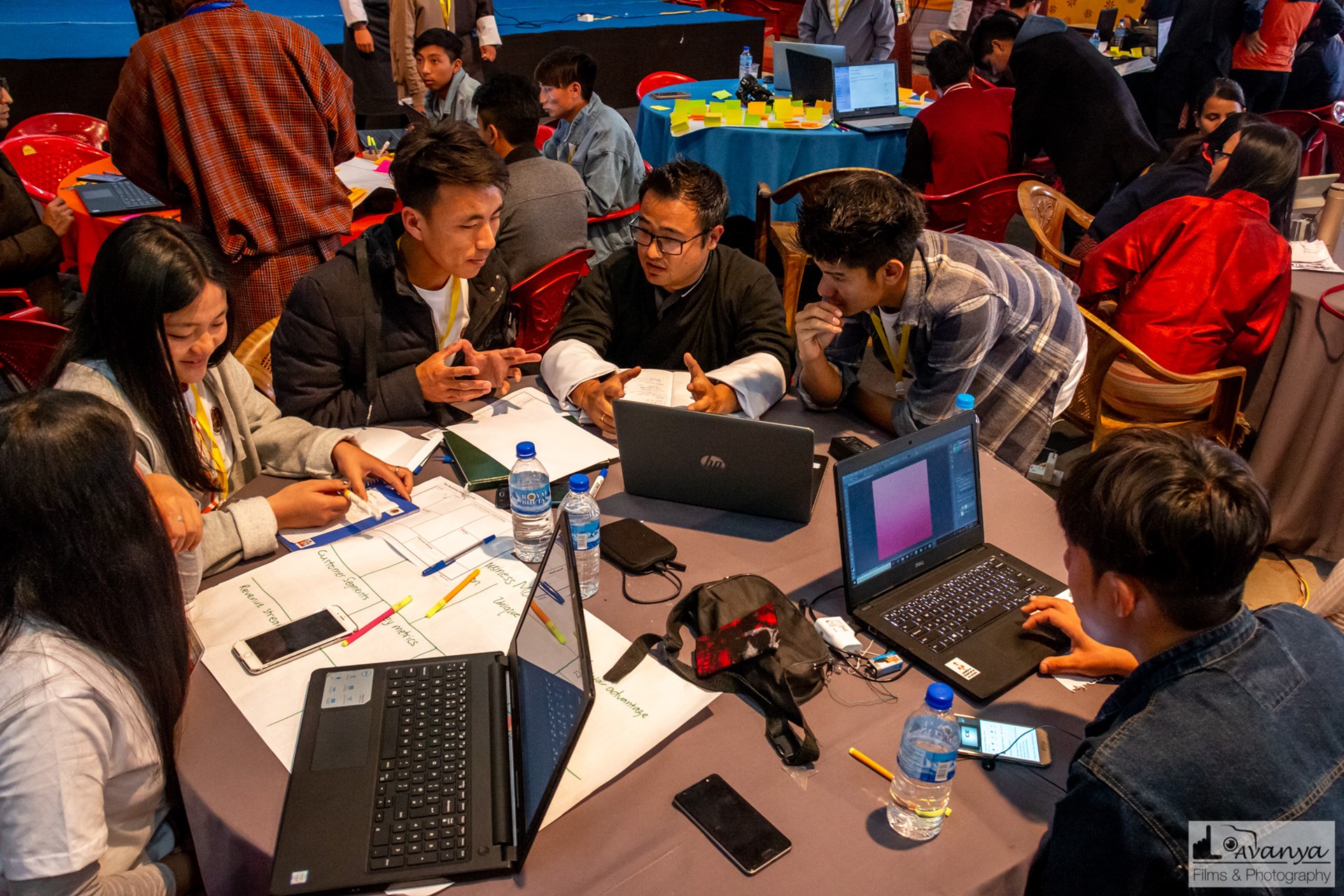
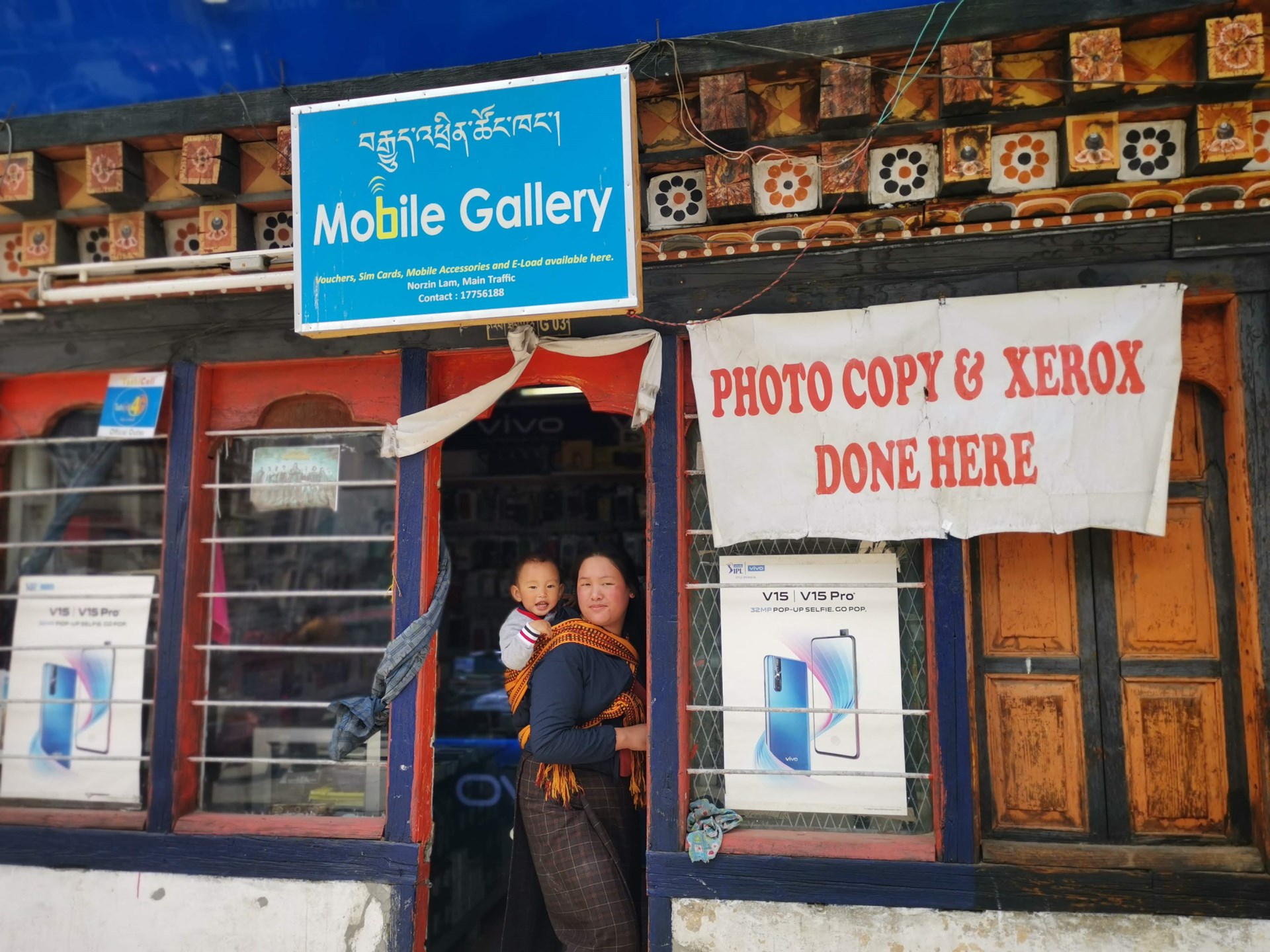
Today, all 20 districts, 205 gewogs (sub-districts), and 200 community centres are connected to the government's intranet system. It's a country where you can find a monk with a smartphone and a yak herder who watches Youtube — and that is neither exaggeration nor tourism marketing. It is simply what happens when a nation leapfrogs five decades of technological evolution in a single generation.
Mobile phones arrived in 2003, four years after television. And from that point, adoption was swift.
The Cultural Reckoning
Of course, the story doesn't end at the studio ribbon-cutting. It gets complicated — as it always does when a closed world suddenly opens.
By 2002, just three years after television arrived, Bhutan was grappling with a visible uptick in crime and juvenile delinquency. Observers pointed directly at the influence of cable television — specifically programmes like professional wrestling, which was eventually banned from Bhutanese airwaves because authorities believed it was contributing to violence among children. The 2006 Information, Communication and Media Act was introduced to regulate content, prohibiting material deemed detrimental to Bhutanese society.
The cultural anxieties ran deeper than crime statistics, though. Bhutanese were suddenly exposed to a world of glamour, advertising, and consumer aspiration they had never encountered before. Products they didn't know they wanted were suddenly being marketed to them. Lifestyles that looked nothing like their own were beamed in, hour after hour.
One of the most poignant accounts of this shift came from Chencho Tshering, then managing director of Kuensel, Bhutan's state-owned newspaper, who recalled a night when the cable service went down. His wife missed her Hindi soap operas, his daughters missed their favourite shows — and the family sat together and actually talked. He called it the best night he could remember since 1999.
That anecdote is not an anti-television argument. It's a very human observation about what changes when the screen enters the room.
Bhutan remains one of the safest countries in the world to visit, with a crime rate that most nations would envy. The anxieties of 2002 were real, but they did not define what Bhutan became.
A Pilot Run for the FIFA World Cup
There's a charming footnote to all of this that deserves its own mention. Before the official launch in June 1999, the BBS actually ran a pilot broadcast in 1998 — specifically for the FIFA World Cup. A small group of Thimphu residents were given access to the broadcasts as a kind of test case, presumably to see whether the kingdom would survive a football tournament before committing to full national coverage.
It is, when you think about it, a very Bhutanese approach to modernisation: cautious, deliberate, and not without a certain wry pragmatism.
What Bhutan's Digital Story Means for Travellers
When you visit Bhutan today, you'll find a country in a genuinely fascinating moment of cultural negotiation. Young Bhutanese are on TikTok and Instagram. The older generation watches BBS news and Indian dramas. Monks stream teachings online. And everybody seems to have an opinion about whether all of this is good or bad — usually both at once.
As a traveller, this tension is one of the most intellectually alive things about being in Bhutan. You are not visiting a museum of pre-modern life. You are visiting a living, breathing society that made a conscious choice about when to open its doors — and is now figuring out, in real time, what that means.
The tourism framework itself reflects this. Bhutan's Sustainable Development Fee (SDF) isn't just a revenue mechanism. It's an expression of the same philosophy that kept television out for so long: let people come, but let us remain in control of how much, how fast, and on whose terms.
It is worth sitting with that for a moment the next time you're in a Bhutanese village and someone's phone buzzes with a WhatsApp message, or you spot a teenager editing a TikTok video outside a dzong. This is a country that had none of this twenty-six years ago — and chose to wait until it was ready. Whether it was, or ever could have been, fully ready is a question the Bhutanese themselves are still working through.
And honestly, that makes it one of the most riveting places on earth to travel.

Fast Facts: Bhutan's Technology Timeline
- 1973 — Bhutan Broadcasting Service launches as a radio service
- 1989 — Satellite dishes banned nationwide
- 1998 — Pilot television broadcasts for the FIFA World Cup (Thimphu only)
- June 2, 1999 — Television and internet officially launched on the same day, marking Bhutan's Silver Jubilee celebrations
- December 1999 — Cable television with 46 channels introduced
- 2003 — Mobile phones arrive
- 2006 — Information, Communication and Media Act enacted; BBS achieves nationwide TV broadcast
- 2008 — 3G mobile network deployed
- 2013 — 4G services piloted
- Today — Over 88% mobile penetration; internet users exceed 88% of the population



Follow Druk Asia on social media for inspiring travel stories, breathtaking photos, and the latest updates from Bhutan.
Ready to Experience the Magic of Bhutan?
Fill in the form below and the friendly Bhutan Travel Specialist team will get back to you with expert advice, itinerary ideas, and everything you need to know. No obligations, just warm guidance from those who know Bhutan best.
Thank you for your message!
Hang tight—one of our friendly Bhutan Travel Specialists from Druk Asia will be reaching out soon with expert tips, insider advice, and exciting itinerary ideas to help you plan the adventure of a lifetime!
Discover
Breathtaking
Bhutan.
Thank you for subscribing!
You have successfully subscribed to our newsletter.
